
"Burundian coffee"
700 article(s) found

Burundian Coffee Bean Flavor Story recommendation of Burundian boutique coffee beans in Burundi coffee producing area
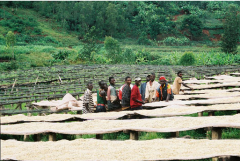
The coffee production type of Bloomberg is similar to that of Yisuobi, and most of them are produced by small ones. Farmers in the Nielu Deer Co-operative Society (Nyarunasi Cooperative) send their harvested ripe fruits to the processing system for unified treatment. The coffee collected by the people is washed and processed with traditional water. After the fruit is removed, the coffee is soaked and washed in the sink and placed on the scaffolding to be dried every day.
Starbucks Burundian Coffee Burundian Coffee producing area introduces where Burundian coffee beans come from?
For professional baristas, please follow the coffee workshop (official Wechat account cafe_style) Burundi is located on the south side of the equator in east-central Africa. It is bordered by Rwanda to the north, Tanzania to the east and south, Congo (Kinshasa) to the west, and Lake Tanganyika to the southwest. There are many plateaus and mountains in the territory, most of which are made up of the plateau on the east side of the East African Rift Valley. The average elevation of the whole country is 1600 meters, which is called the mountain country.

Price characteristics of Burundian Coffee beans Story where can I buy Burundian coffee
Professional coffee knowledge exchange more coffee bean information please follow the coffee workshop (Wechat official account cafe_style) if we tell you that the cup of coffee in your hand is from Burundi. The country in the Rift Valley, which you may not have heard of, is experiencing a vicious circle of unrest and conflict, lack of resources, large population, backward national infrastructure and economic development.

Burundian Coffee Flavor description Taste Variety characteristics Grinding scale Fine Coffee Bean Manor
Burundian Coffee Flavor description characteristics of Burundian Coffee varieties Grinding scale boutique Coffee Bean Manor the capital Bujumbura (Bujumbura) is a political, economic and cultural center of Burundi with a population of 393000 (2012). Bujumbura was formerly known as Wusumbura. In the west of the border, the north bank at the eastern end of Lake Tanganyika. The average annual temperature is about 22 to 26 ℃. The city faces the lake behind the mountain and the climate is pleasant.

Introduction of Burundian Coffee Flavor and Flavor Manor
Burundian coffee bears a striking resemblance to neighboring Rwanda, where coffee from the two countries is often confused. Burundian coffee is mainly grown in bourbon, with traditional wet processing of coffee cherries. Its boutique coffee is characterized by elegant sweetness and bright citrus aromas. This batch belongs to bourbon species micro batch. [Bulundi Champion processing Factory] is located in the card.

A brief introduction to the History and Culture of the Origin and Development of aromatic Burundian Fine Coffee
Coffee production in Burundi: Burundian coffee is now grown only on small farms. Almost all coffee produced in Burundi is Arabian coffee beans, while coffee trees in Ngozi are planted at an altitude of more than 1200 meters. Characteristics of Burundi Coffee: Burundi (Burundian) has the most diverse and successful coffee industry in the world, and has its own characteristics.

Flavor description and taste characteristics of Burundian coffee beans introduction to grinding scale treatment in producing areas
The flavor description of Burundian coffee beans, the characteristics of the taste of Burundian coffee beans are described. With the honor of mama's visit to the Burundian national coffee laboratory, an isolated house not far from the coffee park, there is state-of-the-art coffee roasting equipment. Each of their staff is dressed in white hexagram, and dozens of newly harvested beans are placed on two cup tables.

Description of Burundian Coffee Flavor with spicy aftertaste introduction to the planting environment of the producing area
Burundi coffee was introduced by Belgian colonists in 1930. Unfortunately, many of these farms are on the border with war-torn Rwanda, putting pressure on coffee production. Coffee production in Burundi: Burundian coffee is now grown only on small farms. Almost all the coffee produced in Burundi is Arabian coffee beans.
Introduction to the description of the characteristics and flavor of Burundian coffee varieties in the growing environment
Burundi coffee was introduced by Belgian colonists in 1930. Unfortunately, many of these farms are on the border with war-torn Rwanda, putting pressure on coffee production. Coffee production in Burundi: Burundian coffee is now grown only on small farms. Almost all the coffee produced in Burundi is Arabian coffee beans.

Introduction to the characteristics of Burundian Coffee Bean Flavor extraction time Grinding method
[Bulongdi Champion processing Plant] is located at the Maerdadi Peak of the Panjia treatment Plant in Cabuye District, Cajun Province. It is very high above sea level, and even has mountains over 2000 meters. The soil is fertile, the soil is humid, and the coffee grows very well. It is generally recognized as the best coffee processing plant in Burundi. Bean parameters: country: Burundi growth: 1750 m production area: Kayanza Kabuye

Burundian Jackson bourbon variety coffee beans introduction to boutique coffee beans
The cultivation of Arabica coffee trees in Cameroon (Cameroon) began in 1913 as the Blue Mountain Coffee from Jamaica, but the country also produces large quantities of Robbins coffee. The quality and characteristics of Cameroon coffee is similar to that of coffee from South America. The best coffee in the country comes from Bamileke and Bamoun in the northwest. Here, it also grows some giant coffees.

Burundian Coffee Flavor and Taste Asia General Agent Price Manor region introduction
Burundian coffee flavor taste Asia General Agent Price Manor region traceability is a common problem faced by coffee growers, raw bean buyers and coffee roasters. There are currently about 3500 families working for LMCP. Production and harvesting areas are distributed on eight different hilltops and two processing plants Bukeye (operational in 2013) and Heza (operational in 2014)

Introduction of Burundian Coffee Bean Flavor description method for Taste Grinding characteristics of varieties
Burundian Coffee Bean Flavor [Bulongdi Champion processing Plant] is located at the Mardadi peak of the Panjia processing plant in Cabuye District, Cajuanza Province. the elevation is very high, even more than 2000 meters in the mountain area, fertile soil, loess soil, very good coffee growth, it is recognized as the best coffee processing plant in Pulondi. Bean parameter: country: Burundi growth: 1750 m

The Flavor and Taste of Burundian Coffee beans the characteristics of the manor area introduce the origin of Burundian coffee
(I) Forces for the Defence of Democracy in Burundi (Forces pour la Dfense de la Dmocratie au Burundi, FDD), the ruling party, dominated by the Hutu. Once the largest rebel force, it reached a ceasefire agreement with the transitional government in November 2003, formally became a legitimate political party in September 2004, and won elections at all levels in 2005 to become the ruling party. 2007

A brief introduction to the treatment method of grinding degree and baking degree of aromatic Burundian boutique coffee beans
Coffee production in Burundi: Burundian coffee is now grown only on small farms. Almost all coffee produced in Burundi is Arabian coffee beans, while coffee trees in Ngozi are planted at an altitude of more than 1200 meters. Characteristics of Burundi Coffee: Burundi (Burundian) has the most diverse and successful coffee industry in the world, and has its own characteristics.

Citrus acidity Burundian boutique coffee bean flavor description method grinding degree production area taste baking record
Burundian coffee bears a striking resemblance to neighboring Rwanda, where coffee from the two countries is often confused. Burundian coffee is mainly grown in bourbon, with traditional wet processing of coffee cherries. Its boutique coffee is characterized by elegant sweetness and bright citrus aromas. This batch belongs to the bourbon species micro-batch country: Burundian growth: 1750 meters

Introduction of coffee beans in Kazan Manor, Burundi _ description of the characteristics and flavor of Burundian coffee beans
Professional coffee knowledge exchange more coffee bean information please follow Coffee Workshop (Wechat official account cafe_style) Yandaro | Burundian Coffee Burundi production area: Kayanza, Northern Burundi Variety: Bourbon, Jackson, and Mibirzi altitude: 1760-1850m treatment: washed scaffolding Sun (African beds) Burundi

Bourbon single boutique Burundian Burundi Burundian Champion processing Factory Cajanza Province Coffee
Burundi is located south of the equator in east-central Africa. It is bordered by Rwanda to the north, Tanzania to the east and south, Congo (Kinshasa) to the west, and Lake Tanganyika to the southwest. There are many plateaus and mountains in the territory, most of which are made up of the plateau on the east side of the East African Rift Valley. The national average elevation is 1600 meters, which is known as the mountain country. More than half of them are located in the famous Lake Tanganyika (Lake Tanganyika).

Introduction of grinding scale quality of Burundian Rocasta coffee bean flavor description treatment method
Burundian Rocasta Coffee Bean Flavor description method Grinding scale quality introduction Coffee has a strong and weak taste, so you can't drink three or four cups in a row like tea or cola, but the formal coffee cup is the best. The average amount of coffee to drink is 80-100cc. Sometimes if you want to drink three or four cups in a row, you have to dilute the concentration of the coffee, or add a large amount of

Introduction of Burundian Coffee characteristic Grinding scale Manor Flavor description
Burundian coffee characteristics grinding scale manor flavor description the end of the rich through the introduction of the Belgian people, Bloomberg began to grow coffee in 1930, and most of the varieties are bourbon series. Coffee grows on mountains ranging from 1750 to 2000 meters above sea level. The first Burundian Arabica coffee shop was built by Billy in the 1930s.